
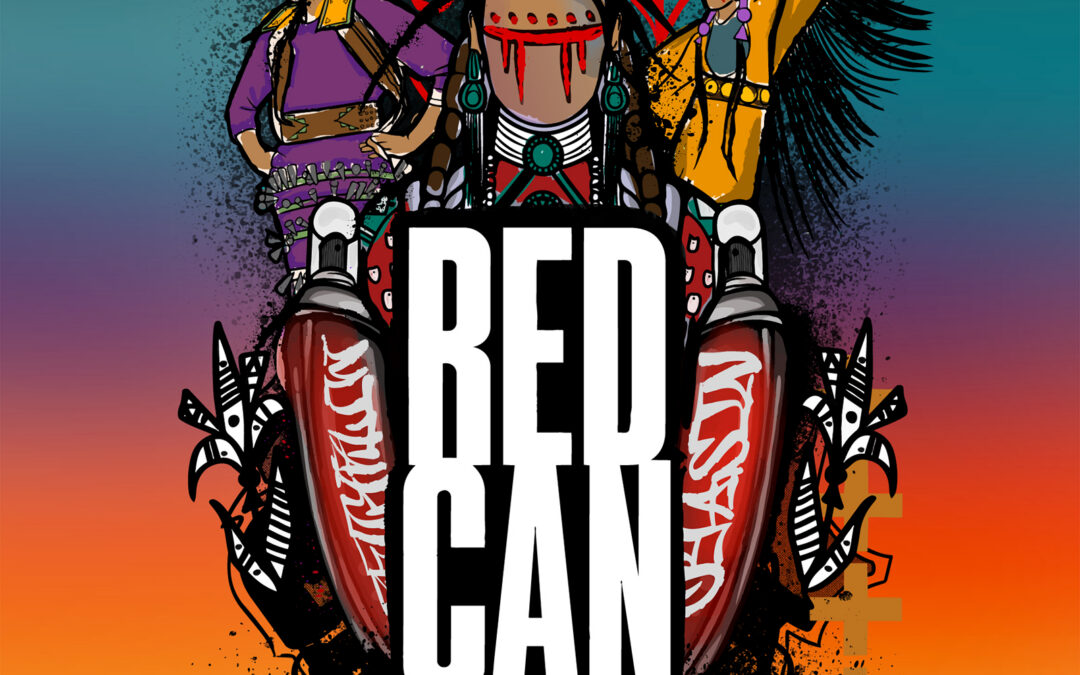
The Cheyenne River Youth Project will host its 12th Annual RedCan Invitational Graffiti Jam on July 8-11. The Native-led nonprofit organization will welcome 11 nationally recognized graffiti and street artists from across the country for the four-day festival, which brings together public art, Lakota culture and youth engagement in the heart of the Cheyenne River Sioux Reservation.
Returning this year are Cheyenne River Lakota artist TamiJoy, who created the design for this year’s RedCan poster and merchandise; Cyfi, a Yaqui and Azteca artist from Minneapolis; 179, a Latine artist from Seattle; Hoka, an artist of Oneida, Oglala Lakota and La Jolla Band of Luiseño descent from Albuquerque; Minneapolis-based artists Biafra and Wundr; J.Duh, a first-generation Nicaragüense artist from the San Francisco Bay Area; Amp, a Ponca artist from Kansas; and Brady Scott, a Midwestern artist also based in Kansas.
Two California-based artists are joining RedCan for the first time in 2026: Native painter and muralist Deity and muralist Wes77.
On July 8-9, the artists will create large-scale murals at sites across the city of Eagle Butte, transforming public spaces with imagery rooted in Lakota culture, history and contemporary life. Many of the works will incorporate Lakota language, an increasingly important element of RedCan’s visual storytelling.
“Through the years, our RedCan artists have brought 125 murals to life across our community, and that number does not include the countless pieces they created in our art park,” said Julie Garreau, CRYP’s founder and chief executive officer. “It’s hard to put into words the transformative power of this kind of public art. It turns passive and even blighted spaces into vibrant, welcoming landscapes that celebrate who we are.”
The youth project’s teen interns and Lakota Art Fellows will work alongside the visiting artists throughout the week, gaining hands-on experience while building relationships and confidence. Meanwhile, younger children will have opportunities to create their own artwork through volunteer-led activities under the CRYP tent at 7th Generation Cinema and Dairy Queen.
On July 10-11, the action will move to the youth project’s Waniyetu Wowapi (Winter Count) Art Park. All 11 featured artists will paint in the park while guests enjoy skateboard painting, chalk painting, hoop dancing, water games, spoken-word performances and more.
While on campus, festival-goers also will get a firsthand look at CRYP’s new arts and culture center, which is currently under construction in the art park. When completed later this year, it will expand year-round arts programming — a welcome development, as the youth project has long since outgrown its small art studio in the Cokata Wiconi (Center of Life) Teen Center.
In addition, Taté Walker, an award-winning two-spirit Lakota storyteller, will be returning to RedCan this year to conduct their popular youth poetry workshops. Workshop participants will have an opportunity to share their work through spoken-word performances in the art park.
Special performances are also on deck from American rapper and singer Murs, who will be participating in his first RedCan event; Bazille, a Cheyenne River Lakota and Crow Creek Dakota rap artist, producer and sound designer; Oglala Lakota singer Reed Two Bulls; and the renowned Mvskoke Creek/Seneca hoop dancers The Sampson Brothers. Lumhe and Samsoche Sampson will teach youth hoop-dancing workshops prior to their Saturday evening performance to close the four-day festival.
As always, the Cheyenne River-based Wakinyan Maza drum group will begin and end each day with songs and a blessing.
Since RedCan started in 2015, its murals have become part of Eagle Butte’s landscape, creating a growing public gallery that celebrates Lakota identity, tells cherished stories and showcases Lakota language in highly visible public spaces. Garreau said the murals are deeply valued on the reservation, cementing RedCan’s place on Cheyenne River’s annual calendar.
“When we first imagined RedCan, we wanted young people to see professional artists doing extraordinary things and learn new skills in a medium that interested and excited them,” she said. “All these years later, RedCan has evolved into something we couldn’t have imagined. It brings together art, culture, language, mentorship and community pride in a way that is unique to Cheyenne River — and it shows our young people that their own voices and stories have value. They deserve to be seen and heard.”
During RedCan 2024, CRYP invited an outside team to assist with documenting participation and assessing the program’s impact. Garreau and her staff learned that 616 youth participated in RedCan art activities, 436 people enjoyed free evening meals in the art park on Friday and Saturday, 535 people directly engaged with artists at their mural sites, and more than 8,600 people walked, rode or drove past the murals over the course of four days.
“These numbers confirmed something we’ve known for years,” Garreau said. “RedCan isn’t simply about creating murals. It’s about creating opportunities for people to connect with their language and culture, with the artists and with one another.”
The festival’s impact also is reflected in youth feedback. In CRYP’s internal surveys, more than 90 percent of youth said that RedCan made them feel proud of their culture and their local community, nearly 80 percent said it strengthened their cultural identity, and 60 percent said RedCan participation improved their Lakota language.
Nearly 100 percent said they wanted RedCan to continue.
To learn more about RedCan 2026, this year’s featured artists and special guests, and how to help support the event, visit www.lakotayouth.org/redcan. Additional details and a full schedule of events will be available in the coming weeks.
To learn more about the Cheyenne River Youth Project and its programs, and for information about making donations and volunteering, call (605) 964-8200 or visit lakotayouth.org. And, to stay up to date on the latest CRYP news and events, follow the youth project on Facebook, Instagram, LinkedIn, Vimeo and YouTube.
The Cheyenne River Youth Project, founded in 1988, is a grassroots, nonprofit organization dedicated to providing the youth of the Cheyenne River Sioux Reservation with access to a vibrant and secure future through a wide variety of culturally sensitive and enduring programs, projects and facilities that ensure strong, self-sufficient families and communities.