
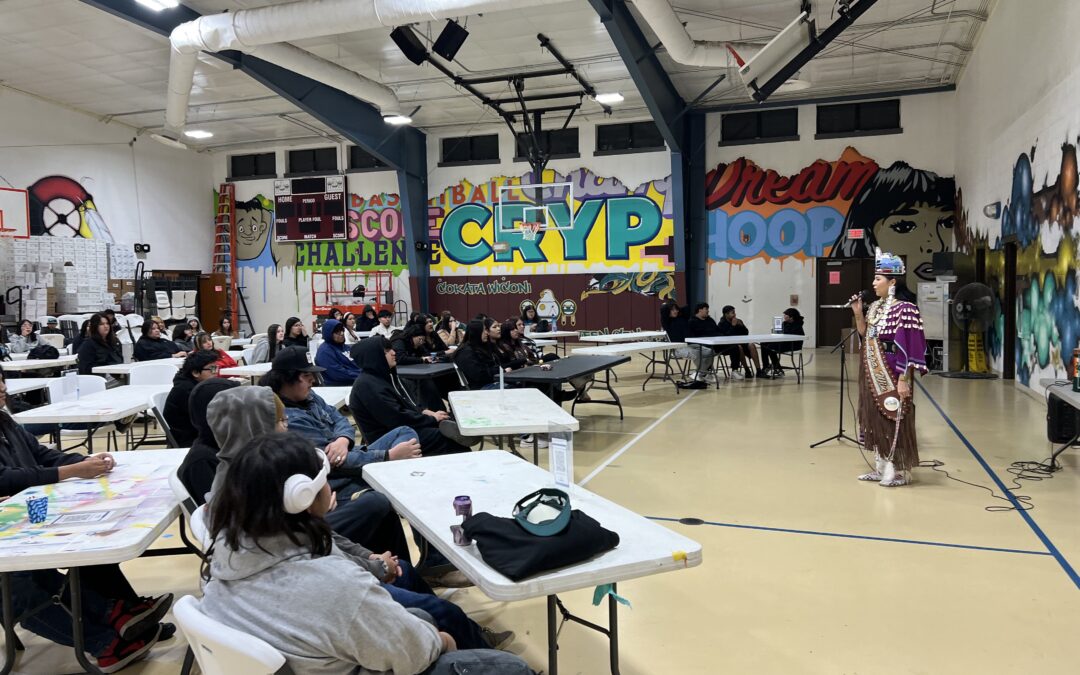
Native American Heritage Month was action-packed as usual for the Cheyenne River Youth Project, but this fall, the nonprofit youth organization did something new. It closed the month of November with a youth gathering dedicated to culture, arts and wellness.
The inaugural Oceti Sakowin Youth Conference welcomed 71 young people to CRYP’s Cokata Wiconi (Center of Life) Teen Center on Nov. 21-23. Designed to be a hands-on, immersive learning experience, the conference featured 15 workshops and four plenaries, all taught by Native instructors.
Over three days, Lakota youth participated in workshops focused on traditional roles and responsibilities, ceremonial teachings, music and beat production, songwriting, self-defense, ledger art, language revitalization, food sovereignty, and protecting sacred sites. They also connected with regional cultural leaders, artists and advocates, attended live performances, enjoyed group meals, and engaged in wellness breaks that included yoga sessions.
According to CRYP staff, the goal was to create a youth-driven gathering that offered cultural education, built practical skills, allowed exploration of new interests, and fostered a sense of belonging and pride.
“Our young people are hungry for opportunities to learn who they are, to experience and connect with their culture in a meaningful way, and to be surrounded by mentors who believe in them,” said Julie Garreau, CRYP’s founder and chief executive officer. “This conference showed us just how much potential there is when we create spaces for them to explore, express themselves, and lift up one another.”
From the youth perspective, the impact was clear. Post-event assessments revealed that participants most valued self-defense training, traditional ledger art, beat-making and songwriting, and learning about women’s and men’s traditional roles in Lakota culture. Many spoke about “wise teachings,” feeling empowered, and understanding how and why their voices matter.
Others shared that it meant a lot to them to learn more about Missing and Murdered Indigenous Women/Relatives (MMIW/MMIR), food sovereignty and protecting He Sapa (the Black Hills) from destructive mining. One young person wrote that their biggest takeaway from the conference was “that young people are heard—our voices are powerful.”
Art also proved powerful, with another young attendee sharing, “I learned how to tell a story with any art.” A third added, “I loved all the workshops.”
The conference opened Friday evening with a community meal, a warm welcome from CRYP staff, and performances from Breanna “Didds” Eaglefeather and Talon “Bazille” Ducheneaux. Youth had opportunities to meet one another, connect with instructors, and set their intentions for a weekend grounded in culture, learning and mutual respect.
Over the next two days, participants rotated through the workshops. Lakota elders Manny and Renee Iron Hawk taught youth about traditional wicasa (man) and winyan (woman) roles, offering stories and teachings that attendees described as wise, interesting and “important for understanding who we are.” Young women also attended a workshop on the Isnati (Womanhood) ceremony.
Youth consistently highlighted Gilbert Kills Pretty Enemy’s ledger art workshop and Billy Walters’ self-defense and Brazilian jiu-jitsu workshop as their favorites. Another was music and beat production with Bazille and Didds, which allowed them to create beats, write lyrics and tell their stories.
“I learned to make a beat loop and write my own song about how I feel,” a survey respondent said.
Additional workshops in food sovereignty, Lakota songs, and Native language course development added depth to the conference programming, while plenaries on MMIW/MMIR and protecting He Sapa highlighted current issues facing Native communities. Across all sessions, youth reflected that the conference helped them feel empowered, connected and grounded in their culture.
“The young people who attended our first conference also expressed what they’d like to see in future gatherings,” said Wakinyan Chief, CRYP’s arts manager. “They want more art and music opportunities, ribbon skirt and beading workshops, drum making workshops, powwow dancing, cooking—and time. They definitely want more time.
“We learned a lot from the experience and their feedback,” he added. “Several noted the value of having optional activities during breaks, and they asked us to offer certain workshops multiple times so everyone would be able to attend the sessions they’re most excited about.”
As planning begins for next year’s conference, the CRYP team will work closely with youth, instructors and community partners to incorporate their feedback, ensuring that the event grows in ways that reflect what Lakota youth want and need most.
“This gathering showed us how much our young people want to learn, create, and be in community,” Garreau said. “They’re curious, they’re talented, and they care deeply about their culture and each other. We’re excited to build on this momentum in 2026, expand our workshop offerings, and continue creating nourishing spaces where they can feel safe, supported and inspired.”
CRYP’s youth and teen centers are now closed through the end of the year so the staff can focus on the Wo Otúh’an Wi Toy Drive, which they anticipate will serve more than 1,200 children across the Cheyenne River Sioux Reservation this holiday season. The campus will reopen to the public in January.
To learn more about the Cheyenne River Youth Project and its programs, and for information about making donations and volunteering, call (605) 964-8200 or visit lakotayouth.org. And, to stay up to date on the latest CRYP news and events, follow the youth project on Facebook, Instagram, LinkedIn, Vimeo and YouTube.
The Cheyenne River Youth Project, founded in 1988, is a grassroots, not-for-profit organization dedicated to providing the youth of the Cheyenne River reservation with access to a vibrant and secure future through a wide variety of culturally sensitive and enduring programs, projects and facilities that ensure strong, self-sufficient families and communities.